1. Information to Prepare Before a Meeting
Effective attainment reviews begin long before staff enter the meeting room. When heads of department and pastoral leaders bring inconsistent or fragmented spreadsheets, meeting time gets eaten up by data verification rather than strategic discussion.
Before starting an attainment review round, ensure the following core inputs are prepared:
2. Whole-School and Department Trends
Start with the big picture before diving into individual names. Using a central school analytics dashboard enables leadership to evaluate departmental trends side-by-side. Avoid starting meetings with individual pupil names. Effective leadership teams look at high-level departmental and faculty trends first before diving into individual case studies.
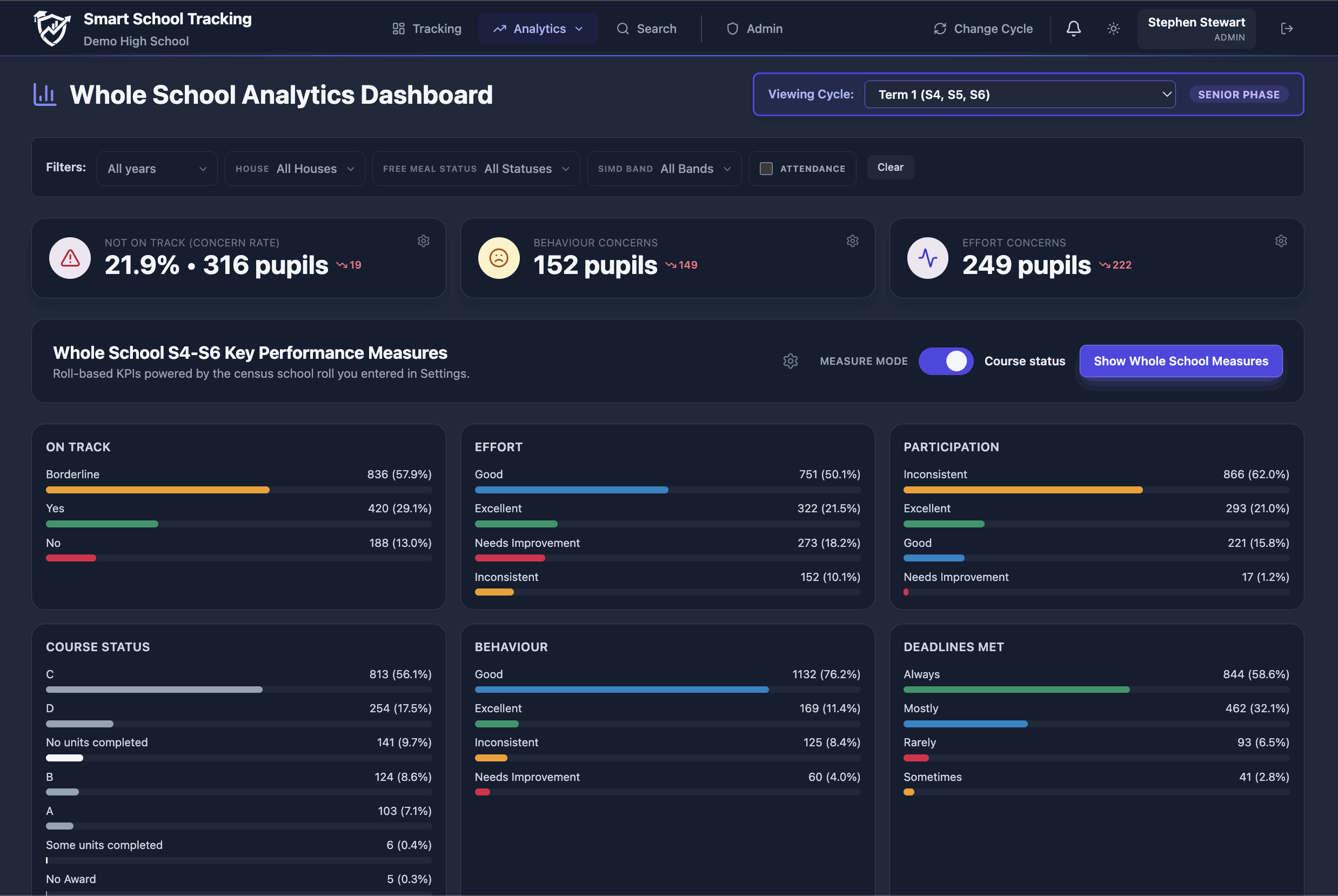
Key questions to address at the departmental level include:
- Which departments show strong "On Track" rates compared to previous tracking rounds?
- Are specific subject areas seeing drop-offs between S4 National 5 performance and S5 Higher enrolments?
- How are broad subject cohorts performing relative to benchmark expectations across the timetable matrix?
3. Borderline and Target Groups
Attainment meetings should give particular attention to pupils whose current evidence suggests that timely, proportionate support could improve progress or prevent disengagement. This may include pupils close to key qualification thresholds, those at risk of non-completion and groups experiencing persistent inequity.
Key Target Group Categorisations:
- • Key Qualification Thresholds: Pupils who currently have four National 5 passes or 2 Higher passes where targeted, evidence-based support can unlock benchmark progression.
- • Level Shifts & Pathway Reviews: Where evidence indicates that a pupil’s current presentation level may no longer be appropriate, schools should review the pathway with the pupil, family and relevant staff, considering the learner’s evidence, aspirations and progression route.
- • BGE Level Progression: S1–S3 pupils making steady progress towards Third or Fourth Level outcomes in core literacy and numeracy.
4. Intervention Watchlists
Once target pupils are identified, group them into actionable watchlists rather than isolated department notes. Structured pupil tracking software for Scottish schools allows guidance staff and House Heads to cross-reference academic progress with pastoral context.
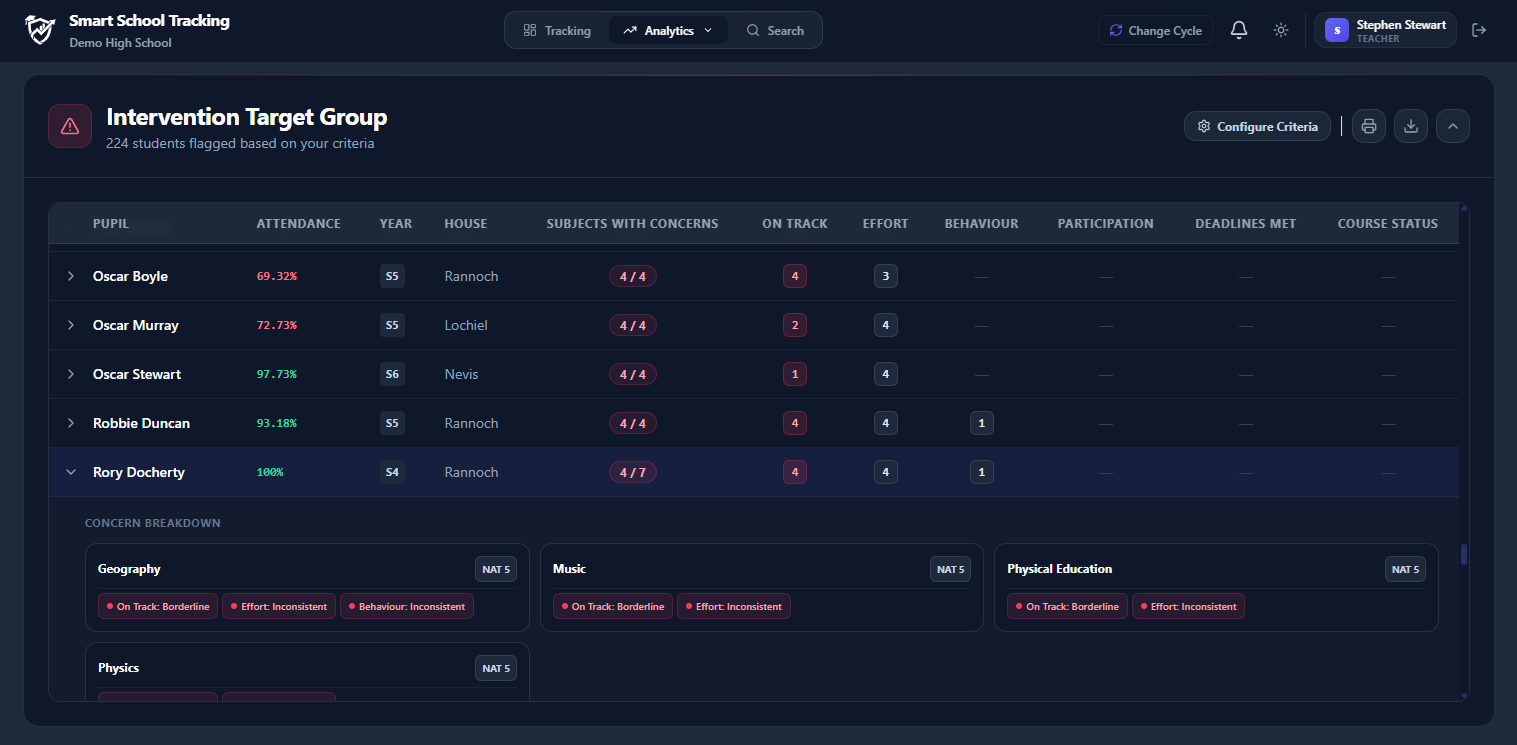
Effective interventions recorded during meetings should specify:
- The specific barrier (e.g. attendance drop, coursework deadline backlog, exam anxiety).
- The agreed support measure (e.g. Easter revision masterclass, targeted supported study, mentor pairing).
- The owner responsible for following up (e.g. PT Pupil Support, Subject Leader, Class Teacher).
5. Comparison with Previous Tracking Cycles
Data at a single point in time tells only half the story. Tracking trajectories across multiple monitoring cycles highlights whether interventions are actually delivering results.
Compare Tracking Cycle 1 (e.g., September status check) with Tracking Cycle 2 (e.g., post-prelim review) to measure distance travelled. If a pupil's progress trajectory remains flat despite added study support, the meeting can pivot to explore alternative strategies early.
6. Recording Actions and Follow-Up
An attainment meeting without documented follow-up actions is a missed opportunity. Ensure every meeting ends with clear, documented outcomes:
- Record agreed actions in the school’s appropriate intervention or action-planning process, then use the tracking platform to review progress at the next cycle.
- Set clear completion deadlines prior to the next scheduled tracking window.
- Share relevant outcomes with pastoral care and parents via clear summary reporting.
7. Avoiding Data Overload
More data does not automatically mean better decisions. Schools often fall into the trap of analysing dozens of sub-metrics simultaneously, leading to meeting fatigue and decision paralysis.
Keep your meetings focused by sticking to 3–4 high-impact metrics:
Streamline your school's attainment reviews
Smart School Tracking brings whole-school analytics, department QA, and pupil intervention watchlists together into one simple platform designed specifically for Scottish secondary schools.